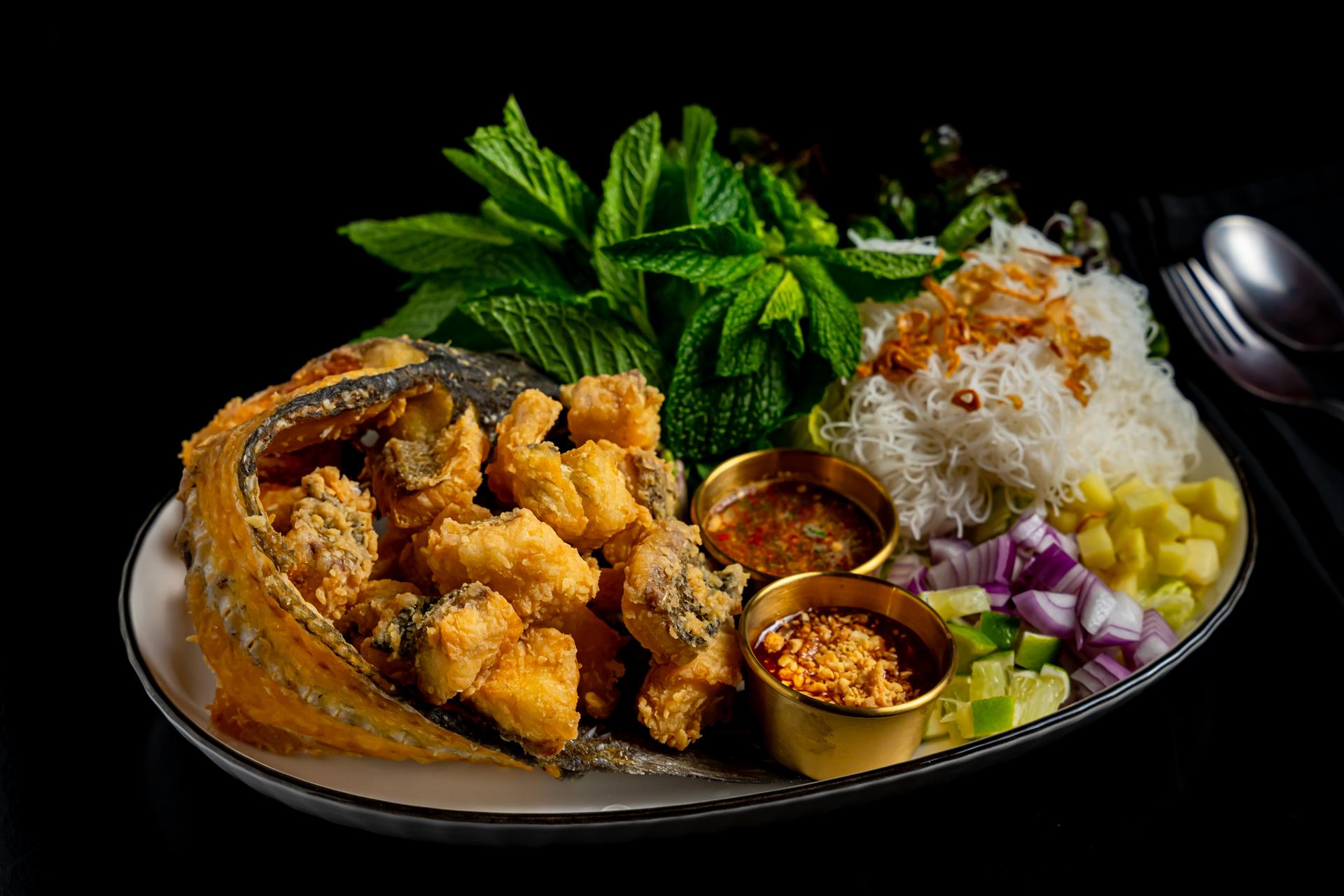
A useful first-visit review does more than announce whether you liked a meal. It gives the next reader enough context to understand what you experienced, what you actually ordered, and which parts of the visit are observation rather than assumption. For a first stop at Arom Dee Thai, a clear review can begin with the restaurant’s own framing: it identifies itself as a Bay Ridge restaurant serving traditional Thai cuisine, and its name, “Arom Dee,” translates to “good mood” in Thai.
That is a starting point, not a conclusion. An honest review should not presume that every visit will feel the same, make claims about what other diners think, or turn a single meal into a sweeping statement. Instead, use the restaurant’s stated identity to organize specific notes from your own visit.
Start with the purpose and circumstances of your visit
Before writing about food, establish the conditions of the visit. Say whether this was your first time, whether you visited alone or with others, and whether you dined in or used another method available to you. If timing shaped your experience, note the approximate day and time without implying that it represents every hour of operation.
Location is also worthwhile context when it helps a reader place the visit. Arom Dee Thai lists its address as 6735 3rd Ave in Brooklyn’s Bay Ridge neighborhood. A concise opening might explain that you were visiting Bay Ridge, looking for Thai cuisine nearby, or making a planned first stop at that address. This is more useful than vague scene-setting because it tells readers why the restaurant was relevant to your day.
Keep facts separate from impressions. “I arrived around early evening on a weekday” is an observation. “The restaurant is always busy at dinner” is a broad claim that one first visit cannot establish. That distinction is the foundation of a review readers can trust.
Let the menu guide your notes, not your assumptions
Arom Dee Thai’s site identifies its food as traditional Thai cuisine and provides a Menu link. Use that information to frame what you chose, then write from your direct experience. Name the dishes or categories you ordered exactly as presented to you, and explain why they caught your attention if there was a reason. If you do not remember a detail, leave it out rather than reconstructing it later.
The most helpful food notes are concrete. Describe the elements you can support from the plate and your own taste: the balance you noticed, the level of heat you experienced, a texture that stood out, or how two items worked together. Explain portion observations only as they applied to your order and party size. Rather than writing “the portions are huge,” write something like, “For our party of two, we found that the dishes we ordered were enough for the meal we had planned.”
It is equally important to mention limits. If you ordered only a few items, say so. A first-visit review does not need to evaluate an entire menu. Narrow, well-supported comments about the dishes you tried are more credible than a long list of judgments about items you did not order.
When discussing traditional Thai cuisine, avoid treating the label as a promise that needs to be proven by one guest’s preference. It is better to say that the restaurant presents itself that way and then describe how your own order aligned with what you hoped to try. This keeps the review grounded in both the restaurant’s stated focus and your personal experience.
Write about the atmosphere with care
The name Arom Dee offers a natural, modest point of reference. Since the restaurant explains that the name means “good mood” in Thai, you can note whether that idea affected what you noticed during your visit—but only as your own impression. For example, if the setting, conversation, or pace contributed to your evening, describe that experience directly. Do not claim that the name guarantees a particular mood for every guest.
Useful atmosphere details often answer practical questions: Was the space easy for your group to navigate? Did the visit feel suited to the kind of meal you intended to have? Was there anything about the setting that changed how you approached ordering or sharing? These notes can be brief, but they should be specific enough to help a reader imagine the context.
Avoid inventing standards that the visit did not establish. A first review is not the place to declare a restaurant ideal for every occasion, to speculate about staffing, or to compare it with unnamed competitors. If something affected your experience, state what happened, when it happened, and why it mattered to you. Clear boundaries make both praise and criticism more meaningful.
Finish with a fair takeaway and practical transparency
A strong ending returns to the scope of the visit. Summarize what you ordered, what you would consider trying again, and what a future visit might help you learn. This gives the review momentum without pretending to be final. You might note that you want to return at a different time, explore more of the menu, or share a meal with a different-sized group. Those are plans, not evidence—and labeling them that way matters.
If a reader needs to verify basic planning details before making their own visit, Arom Dee Thai lists daily hours of 11:30 AM to 10 PM and provides its Bay Ridge address on its website. In your review, though, contact details should remain supporting context rather than the main event. The core of an honest first-visit review is still your account: what you chose, what you noticed, what you cannot generalize, and why the experience may be useful context for someone considering their own visit.
Write with enough detail to be accountable, enough restraint to be fair, and enough personal context to make clear that this is one visit—not a verdict on everyone else’s.
Frequently asked questions
What makes a first-visit review of Arom Dee Thai honest?
Begin with the circumstances of your own visit, then name what you ordered and describe only what you personally observed. Separate a one-time impression from claims about every visit or every guest.
How should I discuss the food in my review?
The restaurant identifies itself as serving traditional Thai cuisine. Use that as context, then focus on the specific dishes you tried rather than making broad judgments about the entire menu.
Which practical details can I include?
Arom Dee Thai lists 6735 3rd Ave, Brooklyn, NY 11220, in Bay Ridge, and displays hours of 11:30 AM to 10 PM daily. These details can provide brief planning context, but your review should remain centered on your visit.
Sources
- Arom Dee Thai - Bay Ridge, Brooklyn, New York, NY — aromdeethai.com
- Arom Dee Thai - Bay Ridge, Brooklyn, New York, NY — aromdeethai.com