
Thai Curry, Clearly: A Friendly Guide to Color, Heat, and Character
A practical guide to the aromatic pastes, coconut milk, herbs, vegetables, and heat levels that give Thai curries their many distinctive personalities.
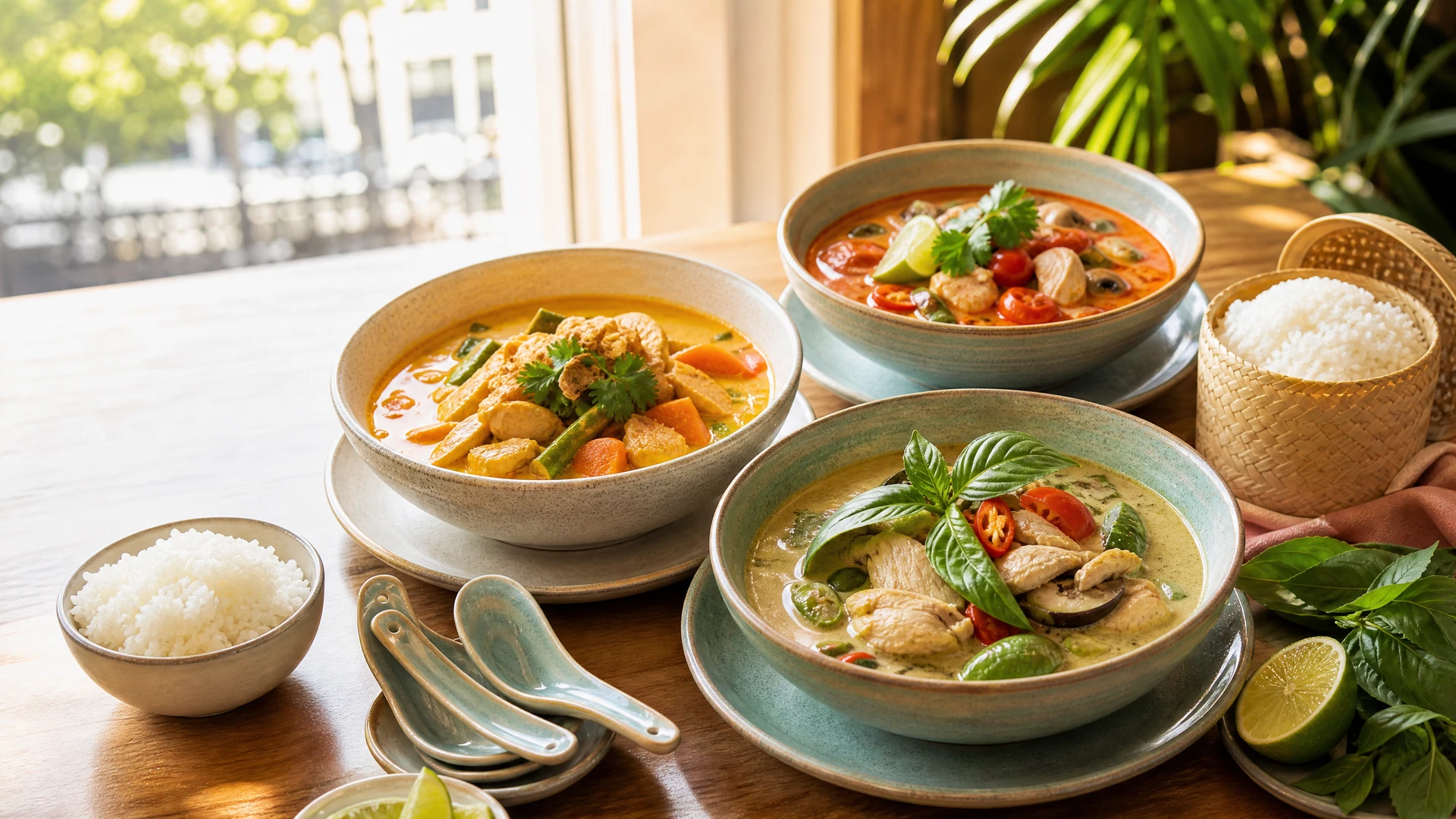
A Thai curry menu can look like a row of colors: green, red, yellow, perhaps panang or massaman. It is tempting to treat those names as a simple heat scale, but curry has more personality than a traffic light. Color offers a clue, not a complete answer. Aromatic paste, herbs, coconut milk, vegetables, protein, seasoning, and kitchen technique all shape the bowl.
The easiest way to choose is to think about character rather than search for a rigid rule. Do you want something bright and herbal, rounded and savory, warmly spiced, or gently rich? Would you like a curry to be the center of the meal or one voice among several shared dishes? Those questions make the menu feel less like a test and more like an invitation.
What Makes a Thai Curry a Curry?
Many Thai curries begin with an aromatic paste. A paste may include chiles, garlic, shallot, lemongrass, galangal, herbs, spices, or other ingredients, depending on the recipe. Pounding or blending these elements creates a concentrated foundation that can be cooked until fragrant before liquid and other ingredients are added.
Coconut milk is common in several well-known curries, but it is not the definition of Thai curry. When present, it can soften edges, carry aroma, and create a silky sauce. The final flavor also depends on seasoning and balance. Saltiness, sweetness, heat, fresh herbs, and acidity may all play a role. Because recipes vary, a curry’s name is a useful guide rather than a universal formula.
Green Curry: Fresh, Herbal, and Expressive
Green curry often gets its color from green chiles and herbs in the paste. Its aroma can feel fresh and layered, especially when basil and vegetables join the sauce. Yet green does not automatically mean mild. Depending on the preparation, it may have noticeable heat.
Choose green curry when an herb-forward dish sounds appealing. Jasmine rice gives the sauce a soft, fragrant base, while a crisp vegetable side can add contrast. If you prefer less heat, ask how the kitchen prepares the dish and whether adjustment is possible. A direct question is more dependable than judging by color alone.
Red Curry: Deep Aroma and Flexible Pairings
Red curry paste commonly draws its color from dried red chiles, along with aromatics that build depth. The sauce can be savory, lightly sweet, and warming, though the exact balance changes from one recipe to another. Red curry is especially flexible at a shared table because it can sit comfortably beside rice, vegetables, noodles, or a fresh salad.
If the curry is rich, pair it with something clean and crunchy. If the table already includes several bold dishes, let steamed rice create space between bites. This kind of contrast helps each dish keep its identity.
Yellow Curry: Warm Spice and Familiar Comfort
Yellow curry is often associated with warm spices and a golden color. It may include turmeric and other seasonings that create an earthy, rounded profile. Many diners find this style approachable because the aroma feels cozy and the sauce pairs naturally with vegetables and rice.
Approachable does not mean identical everywhere. Some versions lean savory, others slightly sweeter, and heat can vary. Think of yellow curry as a useful option when you want warmth and fragrance without assuming exactly how the bowl will taste before it arrives.
Panang and Massaman: Two Distinct Directions
Panang curry is often thicker and concentrated, with a rich texture that clings to each bite. Its character may include aromatic citrus or herb notes alongside coconut richness. Because the sauce is full-bodied, a simple serving of jasmine rice and a lighter vegetable dish can make the meal feel balanced.
Massaman curry travels in a different direction. Warm spices, a gently savory sauce, and substantial ingredients can give it a slow, comforting character. It is often a good choice for diners who want fragrance and depth rather than a sharp chile-forward experience. Again, recipes differ, so ingredient and dietary questions belong in a conversation with the restaurant.
Heat Is Only One Part of Flavor
Spice matters, but it should not erase the rest of the curry. A well-shaped meal lets you notice aroma, saltiness, sweetness, texture, herbs, and the ingredients within the sauce. If you enjoy heat, consider placing a spicy curry beside a calmer rice or vegetable dish. If your group has mixed preferences, order across a few intensity levels instead of asking one bowl to satisfy everyone.
Avoid assuming that coconut milk removes all heat or that a pale color guarantees mildness. Chiles vary, recipes vary, and personal sensitivity varies. Ask specific questions and describe your preference in everyday language. “A little warmth” or “noticeably spicy but still aromatic” may communicate more than a number.
How to Build a Curry-Centered Dinner
For two people, one curry, jasmine rice, and a contrasting vegetable or appetizer can create a complete spread. For a family or small group, choose two curries with different characters, then add rice and something fresh or crisp. A noodle dish can join the table when you want another texture, but several saucy dishes do not always need several more sauces.
Serving curry family-style makes tasting easy. Spoon a small amount over rice, notice the aroma and heat, then adjust the next bite. The goal is not to rush through the bowl. It is to let the sauce, rice, herbs, and other dishes work together.
Choose by Curiosity, Not Color Alone
Thai curry becomes easier to navigate when color is treated as a doorway instead of a verdict. Green may point toward herbs, red toward chile-rich depth, yellow toward warm spice, while panang and massaman offer their own textures and aromatic paths. The kitchen’s recipe completes the story.
Explore the curry selections on Arom Dee Thai’s menu, ask about ingredients or heat when needed, and build a table with enough contrast to make every spoonful interesting. A clear plan leaves plenty of room for curiosity.