
Why Jasmine Rice Belongs at the Heart of a Thai Table
Fragrant jasmine rice does more than fill a plate. It connects shared dishes, balances bold sauces, and gives every diner a flexible way to shape each bite.
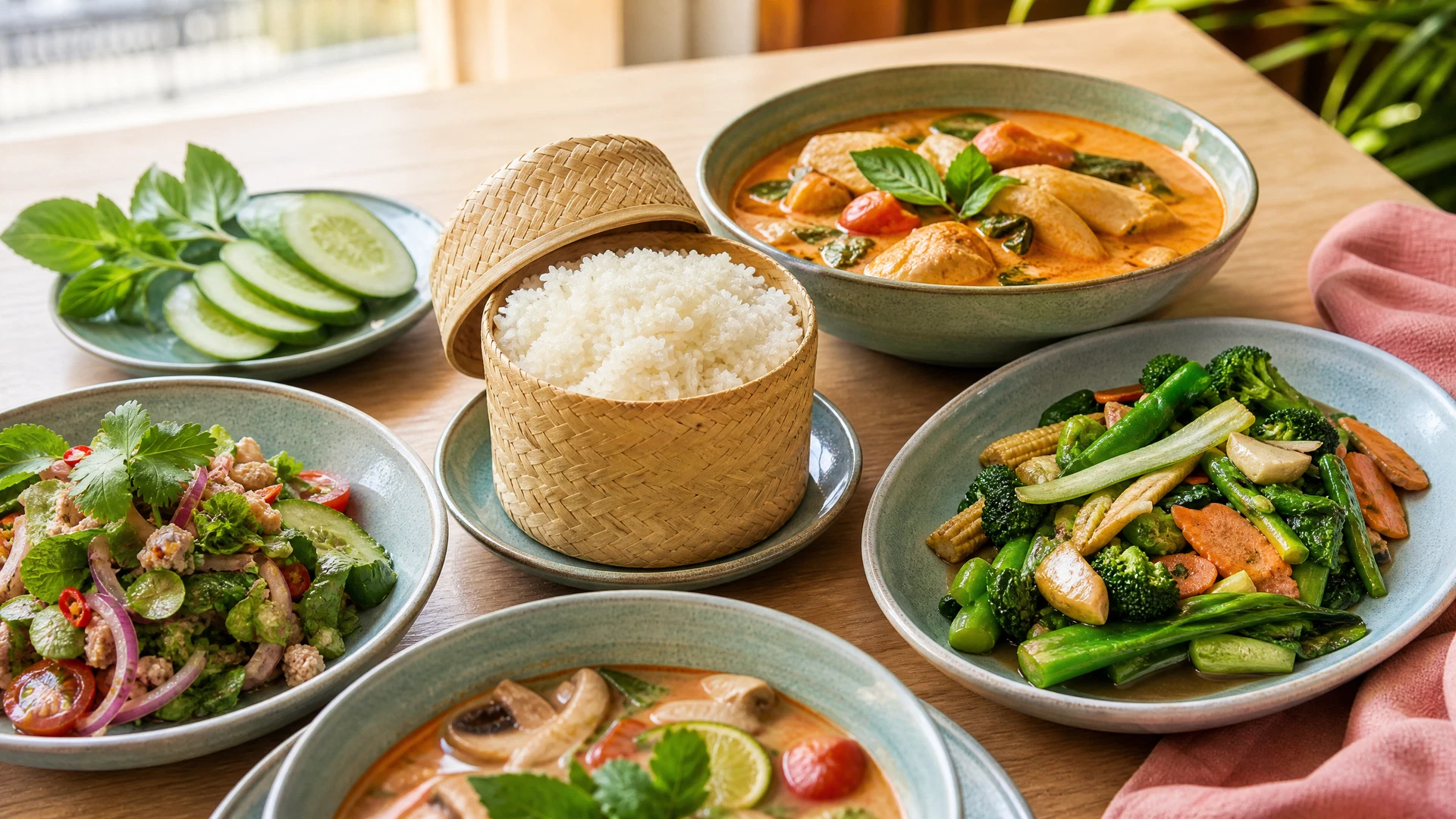
A bowl of jasmine rice can look quiet beside a bright curry or a sizzling stir-fry. That quietness is exactly what makes it important. Rice gives aromatic sauces somewhere to land, turns separate dishes into a connected meal, and allows every person at the table to shape a bite according to taste. It does not compete for attention. It creates room for attention.
In many Thai meals, rice is not merely a side placed at the edge of a plate. It is an anchor. Dishes are chosen, shared, and enjoyed in relationship to it. Understanding that role can make ordering easier, especially for a group exploring several flavors at once.
The Fragrance in Jasmine Rice
Jasmine rice is known for a gentle floral aroma and a soft texture. When cooked, the grains are tender and lightly cling together, making them easy to gather with a spoon and pair with sauce. The fragrance is present without overwhelming herbs, chiles, coconut milk, or wok-cooked vegetables.
That balance matters. A strongly seasoned dish may feel intense on its own, but a little rice changes the ratio in each bite. A mild vegetable dish gains a warm, aromatic base. A spoonful of curry spreads through the grains instead of disappearing in one concentrated taste. Rice acts less like a blank canvas and more like a calm supporting voice.
One Bowl Connects Many Dishes
Picture a table with a curry, a stir-fry, a crisp appetizer, and a fresh salad. Without rice, those dishes can feel like separate stops. With rice at the center, diners can move among them in a natural rhythm. One bite may be rice with a little curry. The next may add a vegetable or a piece from the stir-fry. Each combination changes texture and intensity.
This is one reason a shared Thai meal can feel varied without becoming chaotic. Rice provides continuity. It lets a table hold sweet, sour, salty, spicy, herbal, rich, and fresh notes while giving the palate a familiar point of return.
Balance Is Built Bite by Bite
Thai food is often described through balance, but balance does not mean every dish must contain every flavor in equal measure. A meal can create balance across the whole table. One dish may be tangy. Another may be mellow. A third may be spicy or crisp. Rice helps diners adjust those relationships one spoonful at a time.
If a curry is hotter than expected, more rice may soften the experience. If a vegetable dish is delicate, use less sauce so its texture remains clear. If you want a brighter bite, combine rice with a fresh herb or salad. There is no single correct ratio. The table becomes interactive, and each person can find a comfortable pace.
How Much Rice Should a Table Order?
The answer depends on the group and the dishes. A meal built around several curries or stir-fries may call for more rice than a meal that already includes a full noodle dish. Families sharing multiple plates may prefer a central portion, while a solo diner may want rice packaged separately for easy leftovers.
Instead of searching for a strict formula, consider the menu’s structure. How many dishes have sauce? Is there already a fried-rice or noodle anchor? Are you planning to share everything? If uncertain, ask the restaurant for practical guidance based on the order. That keeps the decision connected to the actual meal rather than a generic serving rule.
Rice, Noodles, and a Table with Range
Choosing rice does not mean skipping noodles. The two can create useful contrast. Rice absorbs and carries sauce, while noodles bring their own chew, shape, and seasoning. For a group, one rice-based center and one noodle dish can make the table feel abundant without repeating the same texture.
A simple framework is to choose jasmine rice, one saucy dish, one vegetable-forward dish, and one item with a different texture. Add noodles if the group is larger or especially interested in variety. This is a starting point, not a rule. The point is to give each item a role.
A Practical Companion for Takeout
Jasmine rice is especially helpful when ordering takeout in Bay Ridge. Keeping rice separate from curry or stir-fry until serving preserves texture and lets diners control each portion. At home, fluff the rice gently before building the plate, then add sauces a little at a time.
Leftover rice and dishes should be handled and reheated according to safe food-storage practices. Because ingredients and packaging vary, follow the restaurant’s guidance when provided and use reliable food-safety recommendations at home. The pleasure of a flexible meal should include thoughtful handling.
A Cultural Role Without a Single Story
Rice has deep importance across Thailand, but Thai food culture is diverse. Regional traditions, household habits, and individual preferences shape how meals are cooked and served. No short article can reduce that variety to one universal table.
What diners can appreciate is the practical wisdom of rice as a shared center. It encourages pacing, combination, and conversation. It allows bold dishes to remain bold while making them easier to enjoy together. It turns ordering into composition: choose a few distinct flavors, then let rice help them speak to one another.
Start with the Center
The next time you plan a Thai dinner, begin with the center rather than the edges. Decide whether fragrant jasmine rice will anchor the meal, then choose dishes that offer different sauces, vegetables, aromas, and textures. You may find that the order becomes simpler once every dish has a relationship to the same bowl.
Explore Arom Dee Thai’s menu with that shared-table idea in mind. Rice may be the quietest item in the spread, but it can be the detail that brings the entire meal together.