
Sharing the Table: Why Thai Food Feels Made for Community
A shared Thai meal creates room for variety, conversation, and individual choice. Here is a simple way to build a welcoming table for any gathering.
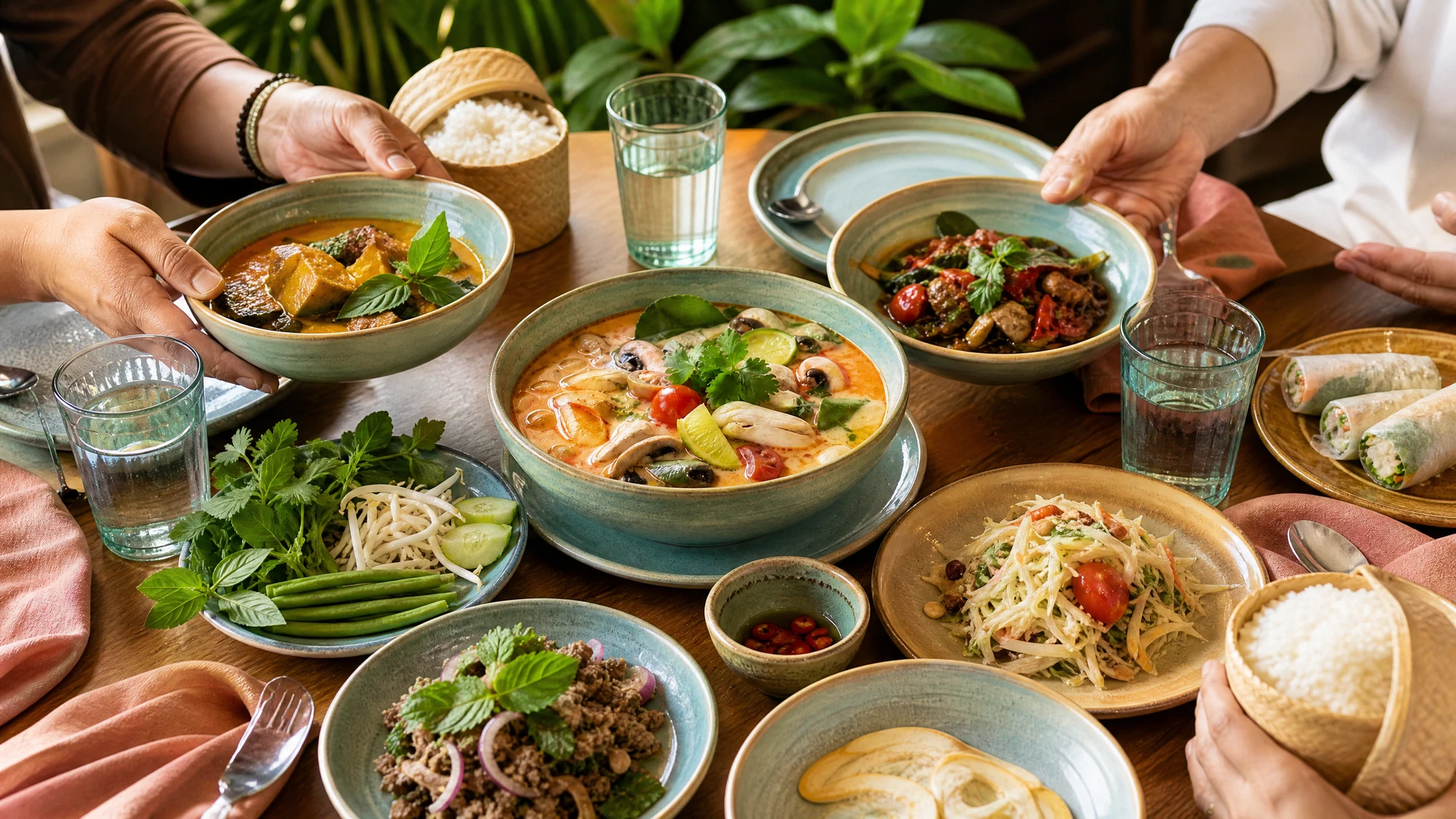
A shared meal changes the way people experience food. Instead of moving through one plate from start to finish, diners pass bowls, compare textures, adjust each bite with rice, and make space for one another’s preferences. Thai food lends itself naturally to that rhythm because a table can hold several distinct dishes without asking everyone to eat the same thing in the same way.
Community does not require a large event. It can be two neighbors catching up, a family settling in after a busy week, or friends gathering around takeout containers in a Brooklyn apartment. What matters is the feeling that the meal has room for everyone.
Variety Creates Conversation
One dish may be aromatic and saucy. Another may be crisp, fresh, or gently savory. When they share a table, each one gives the others context. A bite of curry tastes different after a bright salad. Noodles bring a different texture from jasmine rice. A vegetable stir-fry can create a pause between richer flavors.
This variety often starts conversation without effort. People notice what they enjoy, ask what someone else tried, and discover combinations they might not have chosen alone. The meal becomes participatory. No one needs to deliver a speech about the food; passing a bowl is enough.
Rice Makes Sharing Simple
Jasmine rice is a practical center for a communal Thai meal. Each person can take a portion, then add small amounts from the shared dishes. Rice carries sauces, softens intensity, and helps the table move at an individual pace.
This flexibility is useful when spice preferences differ. A diner who wants a gentle bite can use more rice and choose a milder dish. Someone who enjoys chile heat can explore a more assertive curry. The group shares the experience without requiring identical plates.
Give Every Dish a Role
A welcoming table does not need a long order. It needs a little contrast. Start with rice, then choose a saucy dish, a vegetable-forward dish, and something with a different texture. For a larger group, add noodles or a second main dish with another flavor profile.
Thinking in roles avoids repetition. Three rich curries may be delicious, but the meal can feel more open with one curry, one stir-fry, and one fresh or crisp item. If the group already knows what it loves, keep familiar choices and add one point of curiosity rather than making every dish new.
Make Room for Different Preferences
Good hosting begins with questions. Does anyone avoid certain ingredients? How does the group feel about heat? Are there allergies or dietary requirements that must be discussed with the restaurant? Menu labels can help, but they do not replace a direct conversation about ingredients and preparation.
Once those needs are clear, build a table that does not isolate anyone. Include at least one broadly approachable dish, distribute heat rather than concentrating it everywhere, and keep sauces separate when that makes serving easier. Thoughtfulness is more important than abundance.
The Gentle Etiquette of a Shared Meal
Sharing works smoothly with a few simple habits. Take modest portions first so everyone can try each dish. Use serving utensils when available. Pass items that are out of reach instead of stretching across the table. If one dish is especially spicy or contains a known allergen, make that clear before plates are built.
There is no need to police every bite. The goal is ease. A shared table succeeds when people can eat comfortably, ask questions, and return to the dishes they enjoy.
Community at Home or in the Dining Room
Dining in offers the pleasure of dishes arriving ready to share, with less setup and cleanup. A meal at home can feel just as connected when containers are opened, rice is placed at the center, and everyone is invited to build a plate.
For pickup or delivery, unpack before the group sits down. Match lids to dishes, keep crisp items protected from steam, and place serving spoons nearby. A few minutes of preparation turns a collection of packages into a table.
A Flexible Plan for Gatherings
For four people, a practical starting point is rice, one noodle dish, and three shared dishes with distinct roles. For a smaller group, reduce the number of shared items rather than ordering several similar plates. For a larger gathering, repeat useful anchors and expand the range of vegetables, sauces, and heat levels.
This is not a serving-size promise, because appetites and dishes vary. Ask the restaurant for guidance based on the actual order. If food will travel or sit before serving, discuss timing and packaging so the meal arrives in a form that works for the gathering.
Supporting a Neighborhood Rhythm
Neighborhood restaurants are part of the everyday fabric of places like Bay Ridge. A shared meal can mark a birthday or holiday, but it can also make an ordinary Tuesday feel more connected. Choosing a local table, planning pickup along 3rd Avenue, or bringing dinner to a nearby friend are all small ways food enters community life.
That idea fits the meaning of Arom Dee: good mood. A good mood does not have to be loud. It can be the simple comfort of enough rice, several bowls within reach, and time to hear how everyone’s week is going.
Pass the Bowl
Thai food feels made for community because it supports variety without losing cohesion. Rice creates a center. Shared dishes add contrast. Each diner has room to choose a comfortable pace, while passing bowls keeps the table connected.
When planning your next gathering, explore Arom Dee Thai’s menu and build around the people who will be there. Choose a few distinct flavors, ask the questions that matter, and leave room on the table for both food and conversation.