
Fresh Herbs, Bright Flavors: The Building Blocks of Thai Cooking
Meet the herbs and aromatics that can bring freshness, citrus, warmth, and chile heat to Thai cooking—and learn how they work in layers.
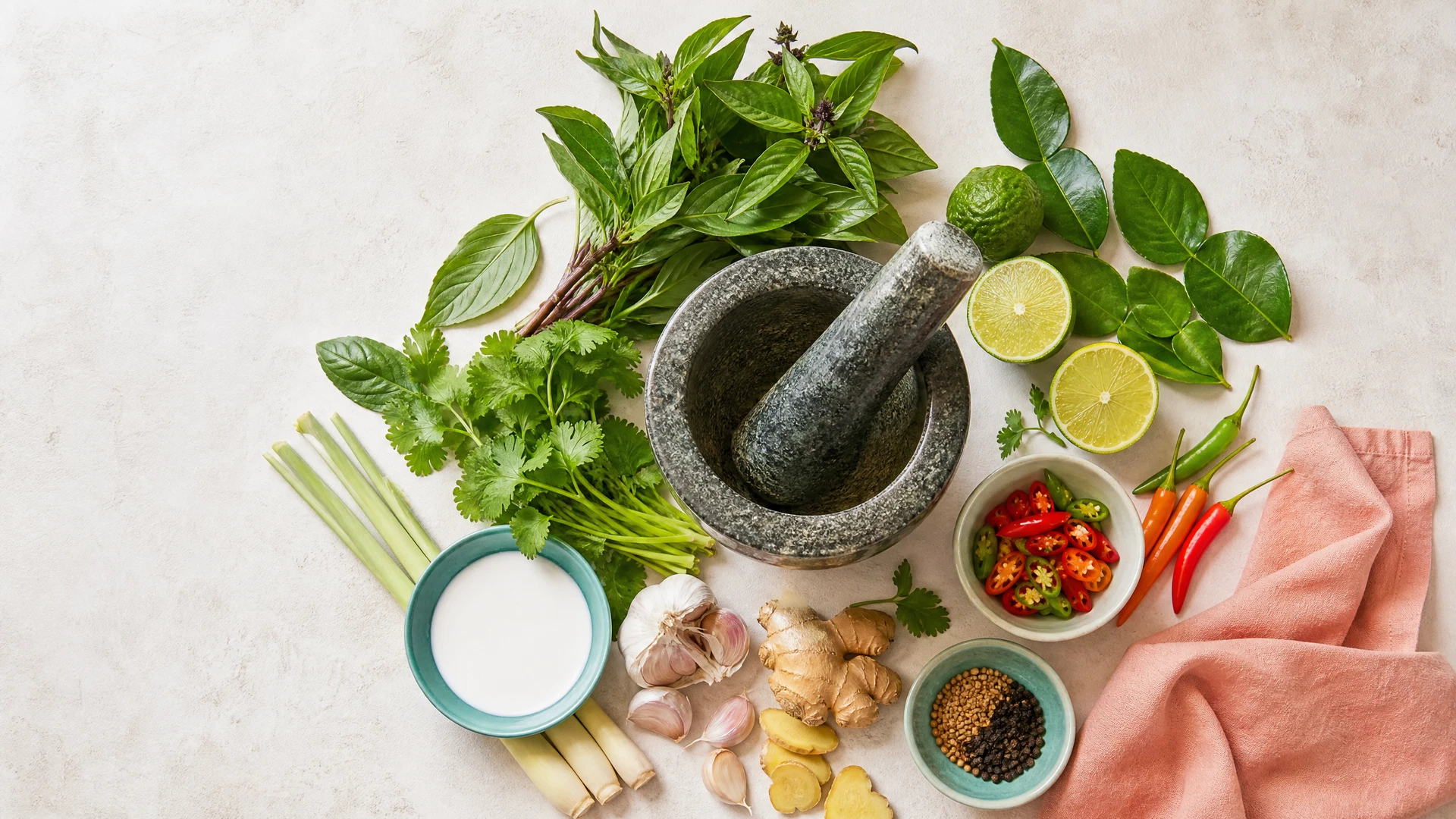
Thai food can feel vivid before the first bite. A torn basil leaf releases a green, peppery aroma. Lemongrass brings a clean citrus impression without tasting like lemonade. Lime can sharpen the edge of a sauce, while ginger, garlic, and chiles create different kinds of warmth. These ingredients are often called “flavor builders” because they shape the direction of a dish from its foundation to its finishing touch.
There is no single ingredient list that defines every Thai recipe. Thailand has varied regional traditions, and cooks make choices based on the dish, season, household, and available produce. Still, learning a few common herbs and aromatics makes a menu easier to understand and a meal more interesting to notice.
Thai Basil: Fragrance with Personality
Thai basil can add a distinct herbal aroma with lightly peppery and anise-like notes. Heat releases its fragrance quickly, so it may be folded into a stir-fry near the end or used to perfume a curry. The leaves soften, but their character remains recognizable.
Not every basil tastes the same. Different varieties have different aromas, and substitution changes a dish. When Thai basil appears on a menu, expect it to contribute more than a green garnish. It can become one of the central voices in the sauce.
Cilantro from Leaf to Stem
Cilantro can bring freshness to soups, salads, sauces, and finished plates. The leaves are familiar, but stems and roots may also be used in aromatic preparations, depending on the recipe. Their flavor can be more concentrated and earthy.
Because people experience cilantro differently, it is useful to ask questions if the ingredient is a concern. In a composed dish, removing leaves from the top may not remove cilantro that was used earlier in a paste or broth. Clear communication matters more than guessing from appearance.
Lemongrass and a Citrus-Like Lift
Lemongrass offers a bright aroma that suggests citrus while remaining distinctly herbal. Its tougher stalks can be bruised, sliced, or pounded to release fragrance into soups, curries, and marinades. Depending on preparation, pieces may be present for aroma rather than intended as a tender bite.
This ingredient is a good example of how aroma creates dimension. Lemongrass can make a rich liquid feel lighter and can give a clear broth a long, fragrant finish. It often works with other aromatics rather than standing alone.
Lime and Makrut Lime Leaves
Fresh lime juice can brighten a finished dish with acidity. Added at the right moment, it helps flavors feel distinct and can balance sweetness or richness. Makrut lime leaves contribute a different kind of citrus aroma. Their fragrance is intense and leafy, and the leaves may be sliced finely or used to perfume a sauce.
Lime juice and lime leaves are not interchangeable. One contributes direct acidity, while the other emphasizes aroma. A recipe may use either or both, depending on the effect the cook wants.
Ginger, Galangal, and Distinct Warmth
Ginger is widely recognized for its fresh, warm character. Galangal is related but has its own firmer texture and piney, citrus-like aroma. Treating them as identical misses part of what makes a broth or curry distinctive.
These rhizomes can be sliced, pounded, or incorporated into pastes. Their role may be noticeable in the first aroma or may sit beneath other flavors as part of the foundation. When reading a menu, names such as tom kha can offer a clue that galangal is important to the dish, though preparation still varies.
Garlic, Shallot, and the Savory Base
Garlic and shallot help create depth. They may be pounded into curry paste, cooked in oil, or used to begin a stir-fry. Heat changes them: sharp raw notes become sweeter and more rounded, while careful browning can add a toasted aroma.
These ingredients demonstrate why flavor is built in stages. The same garlic tastes different when raw, gently cooked, or crisped. Technique is part of the ingredient list even when it does not appear in the menu description.
Chiles: Heat, Color, and Aroma
Chiles can provide heat, but they also bring fruitiness, smokiness, color, and aroma. Fresh and dried chiles behave differently, and the amount is only one factor in perceived intensity. The rest of the meal matters, too. Rice, coconut milk, vegetables, and other dishes can change how heat feels across the table.
If you are sensitive to spice, ask how a dish is prepared and whether its base already contains chile. If you enjoy heat, leave room to notice the ingredients around it. Intensity can be exciting without becoming the only story.
Balance Happens in Layers
The familiar idea of balancing sweet, sour, salty, spicy, and savory flavors is useful, but it should not become a rigid checklist. A single dish may emphasize only a few elements. Balance can emerge across a shared meal, with rice calming a curry, salad brightening a stir-fry, or herbs lifting a rich sauce.
Aromatics also arrive at different moments. Paste cooked at the beginning creates a foundation. Herbs added during cooking infuse the dish. Lime or fresh leaves at the end can sharpen the final impression. This sequence explains why two recipes with similar ingredients may taste very different.
Notice More at Your Next Meal
You do not need to identify every herb to enjoy Thai food. Start with one question: what do you smell first? Then notice whether the dish feels citrusy, green, warm, savory, or chile-forward. Take another bite with rice or a different shared dish and see how the balance changes.
Explore Arom Dee Thai’s menu with curiosity about those layers. Ask about ingredients when dietary needs matter, and let basil, lemongrass, lime, ginger, garlic, and chiles reveal how much character can grow from a handful of thoughtful building blocks.